
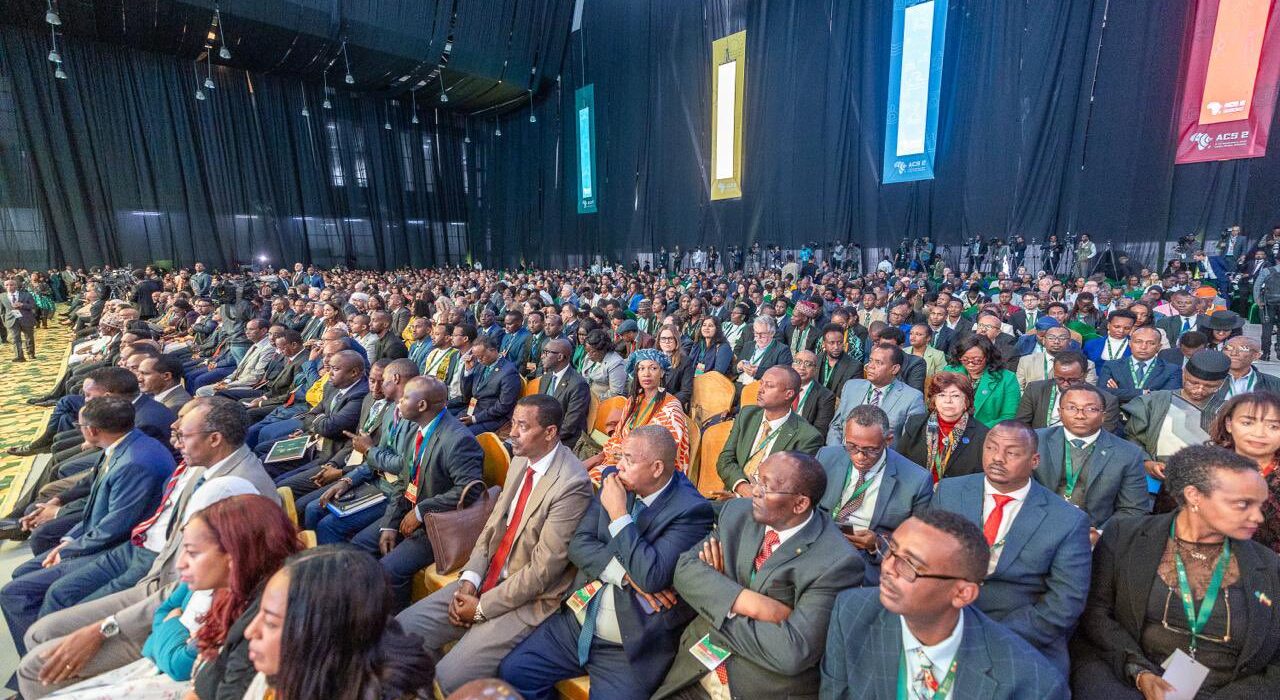
The Second African Climate Summit (ACS–2) got underway in Addis Ababa, Ethiopia, today, Monday, 8th September 2025, with a resounding call for the continent to boldly confront lingering challenges to its climate agenda, while building partnerships to add momentum to the global march towards a climate-safe future for humanity.
The continent must resist the lure of an isolationist mindset and instead strengthen collaboration with global partners, who must be held accountable to both the continent and the international community.
To further bolster the continent’s commitment to Climate Action, the Summit released a report titled Africa’s Journey of Climate Action and Partnership, which provides vital points for reflection on the gains realized so far and the work ahead.
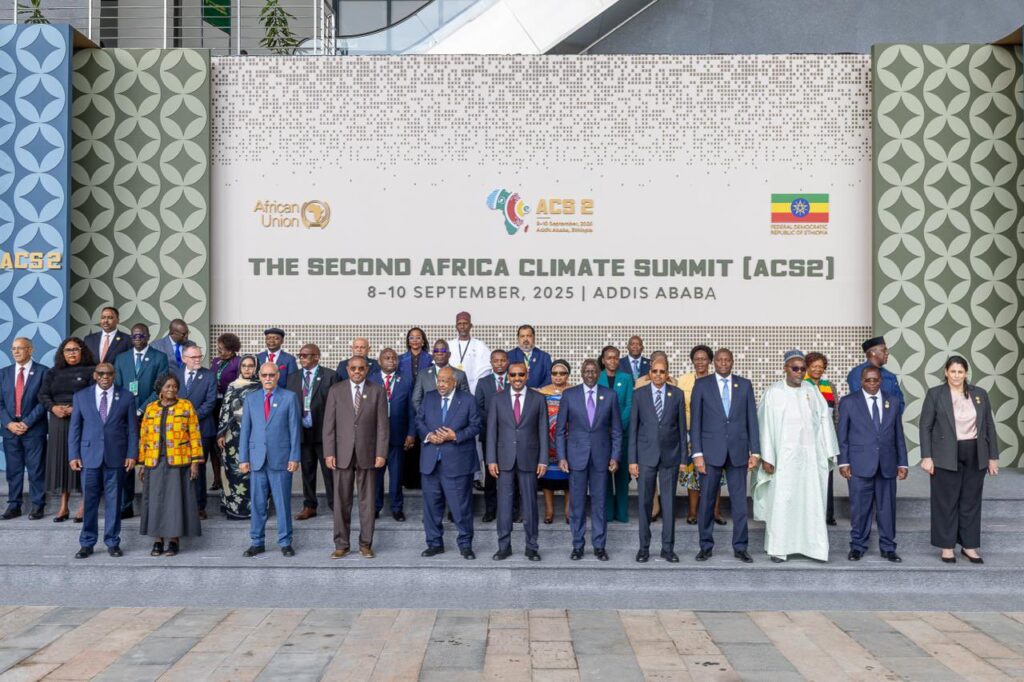
This came as Ethiopian Prime Minister Abiy Ahmed rolled out a red carpet for African Heads of State and Government, for the ACS-II, which is expected to build on the gains of the inaugural Nairobi Summit held in 2023 and credited with introducing a bold new perspective of Africa as a continent of opportunity and a source of solutions, not just a victim.
Kenya’s President William Ruto, the Chairperson of the Committee of African Heads of State and Government on Climate Change (CAHOSCC), who was the host of the Nairobi Summit joined his counterparts from the continent at the Summit, whose outcome is also set to shape Africa’s position at the upcoming COP30 to be held in Belem, Brazil between November 10th to 21st, 2025.
The Addis Summit has been preceded by a series of sessions, including one that tackled Reforms of the International Financial Institutions in the Context of Climate Change and Other Global Crises on Sunday.
In his remarks at the Opening Session of the Summit today, President Ruto described the Addis Summit as an opportunity to celebrate achievements realised since the Nairobi Summit, confront challenges with unity, hold African States accountable, and inspire one another to greater action.
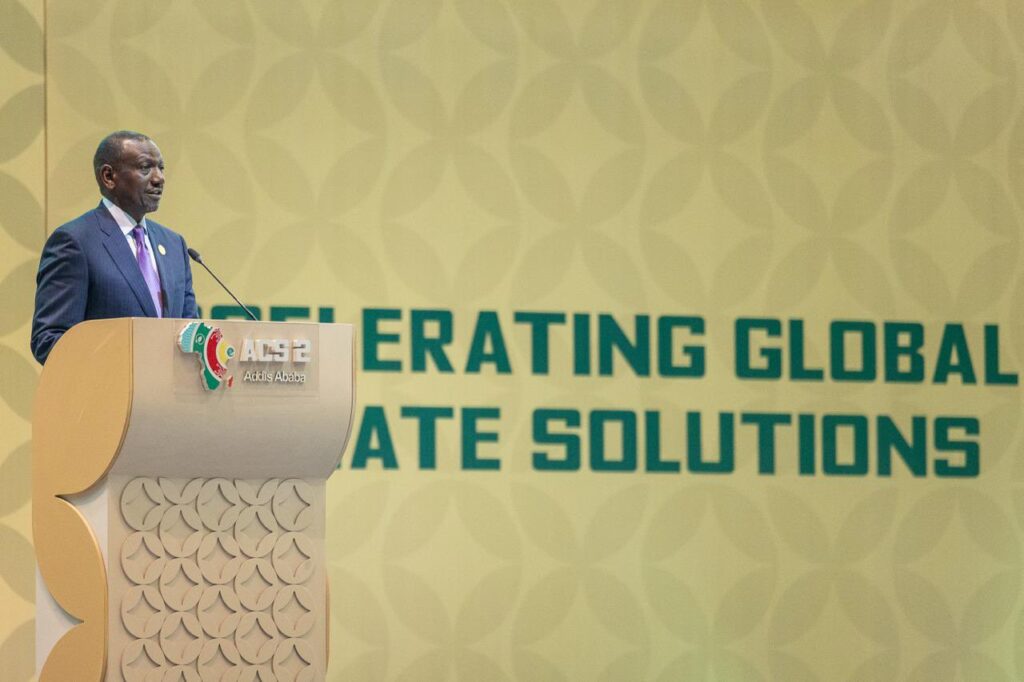
“Two years ago, I had the honour of welcoming you to the inaugural Africa Climate Summit in Nairobi. Then, we looked ahead to a future of possibility, of global collaboration, resilient prosperity, and inclusive growth for Africa. We framed climate action not as a burden, but as a driver of economic growth, transformation, and job creation for African communities,” President Ruto said.
He added, “Together, we adopted Climate Positive Growth as our development paradigm. In doing so, the Nairobi Declaration established Africa not only as a partner but as a power in the emerging global order.”
Two years down the line, Africa has made significant progress. The continent’s potential is recognised, its voice is heard, and preferred solutions are being deployed: from green infrastructure and climate-smart agriculture, to landscape restoration, waste management, and even cutting-edge technologies like direct air capture. Across the continent, African entrepreneurs and communities are innovating and building resilience from the ground up.
This progress occurs against a backdrop of a rapidly changing world.
According to President Ruto, global interconnectedness is deepening, but so too is the temptation to retreat into narrow self-interest, transactional partnerships, and short-term gains. Too often, commitments are broken, and international solidarity is dismissed as weakness, precisely when the scale of the climate crisis demands enhanced cooperation, not less.
“The truth is undeniable: no nation can solve this crisis alone. Only through bold, united, and sustained collaboration can we avert climate catastrophe. Isolation is not a winning strategy; it is courting failure. Acting alone, we will squander time, waste resources, and forfeit the future,” he said.
He reminded the Summit that these realities compel the continent to remain steadfast in building a modern, green, and inclusive industrial base at home; to secure Africa’s rightful place in the global economy; and to foster the solidarity needed to confront climate change.
He noted that Ethiopia, as host of this year’s Summit, has rightly emphasized implementation and finance, thereby moving from vision to action.
To realise the continent’s vision of Climate Positive Growth, action must be taken on two fronts: Africa must exercise its agency decisively, urgently, and coherently; and the international system must dismantle the structural barriers that continue to hold the continent back. Both demand deeper collaboration.
“Africa is already stepping up. Nationally, regionally, and continentally, we are putting in place policies that attract investment, reward innovation, and ensure fair value for our resources. Increasingly, we present a united African voice in global discussions. We are also bridging previously siloed debates, including linking debt, fiscal space, nature, and climate, to craft systemic and coordinated solutions,” President Ruto said.
Measures already taken include the strengthening of institutions and regional mechanisms, from the Alliance of African Multilateral Financial Institutions to the African Credit Rating Agency, while advancing the AfCFTA through the Africa Green Industrialisation Initiative.
By linking this Initiative with the Accelerated Partnership for Renewables in Africa (APRA), the continent will ensure that investment drives progress in both energy and industry—the twin engines of a modern African economy built on abundant, clean power.
However, President Ruto observed that more needs to be done. These include deepening fiscal discipline, accelerating trade integration, mobilizing African institutional capital, investing in knowledge, and improving governance – all deemed by all to be the foundations of resilience.
Describing the Nairobi Declaration as a key beacon, Dr Ruto said Africa must lead in advancing this agenda. At the same time, international partners have the responsibility and the self-interest to support it. Success will depend on both sides: Africa delivering at home, and the global system opening space where Africa’s climate, business, and development goals converge.
This requires lowering the cost of capital through reforms of global financial institutions, expanding concessional flows, mobilizing private investment at scale, integrating climate considerations into lending, and addressing currency and debt risks. It means reforming trade and subsidy regimes and opening global markets to Africa’s value-added goods and solutions – from climate-smart agriculture and green industrial products, to carbon credits.
President Ruto expressed concern that today, climate action risks being sidelined, as national security and short-term interests drive a transactional approach to trade and investment. Development assistance is shrinking. While this strengthens the continent’s resolve to design, finance, and drive our own future, it also reflects a world where too many assume that for some to win, others must lose.
“It has never been more urgent for Africa to stand together and demonstrate that collaboration delivers prosperity and peace for all. Our economies, our weather systems, and our very survival are interconnected. We must focus on win-win solutions, because they do exist, and they are firmly within reach,” President Ruto said.