
BY MARICUS AGUTU
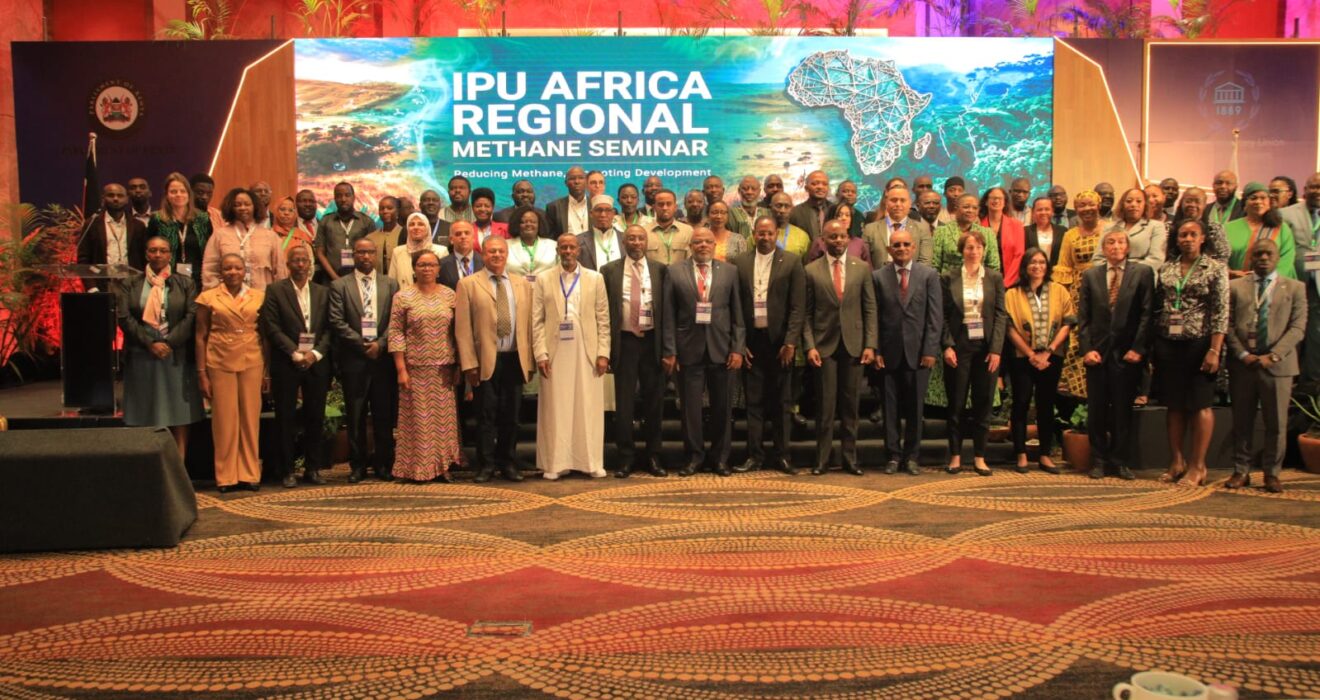
Methane emissions, how its exacerbates climate change and the bold and strategic measures African countries need to adopt to reverse the worrying global warming trajectory constitute the subject matter of a ground-breaking conference by parliamentarians from across the continent that kicked off today Friday 15th May, 2026 in Nairobi, Kenya.
After successfully hosting the African Climate Change Summit of September 2023, Nairobi once more plays host to this yet another key engagement that touches on climate change, in what leaders described as an affirmation of Kenya’s position as a continental leader in climate diplomacy, environmental governance and sustainable development discourse.
This time, however, it is Parliaments that are on the spotlight as they take on a matter that is increasingly becoming topical in the climate agenda, and which African legislators contend can no longer be peripheral in the discharge of their mandate of legislation, representation, oversight and budget-making.
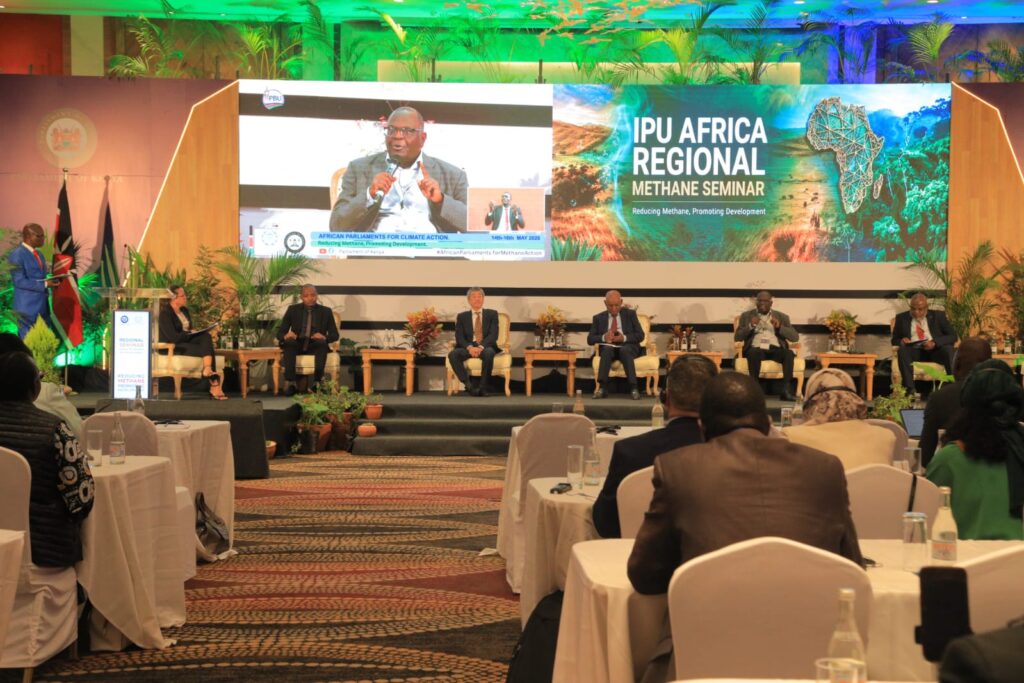
The Inter-Parliamentary Union (IPU) Regional Methane Seminar appropriately themed: “African Parliaments for Climate Action: Reducing Methane, Promoting Development”, is co-hosted by the Parliament of Kenya and the IPU – the Geneva-based global organisation of national parliaments, founded in 1889 to promote democracy, peace, and cooperation through parliamentary diplomacy.
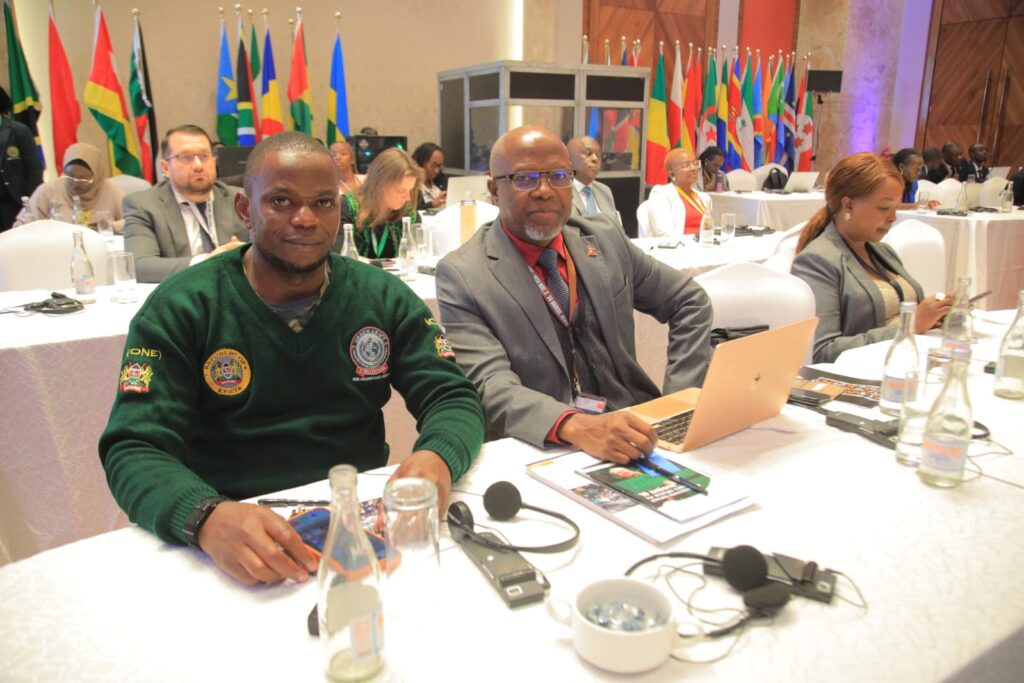
In attendance are about 100 legislators from 21 countries. They include Speakers of National Legislatures from across Africa, parliamentary delegations, representatives from the United Nation Environmental Programme (UNEP) and other development partners, and researchers, scientists and climate exerts.
Groups and organisations behind the seminar are the Inter-Parliamentary Union (IPU), the United Nations Environment Programme, the Climate and Clean Air Coalition, the International Livestock Research Institute, the Consultative Group on International Agricultural Research, the Mazingira Centre, Climate Parliament, and the Parliament of Kenya Climate Caucus., among other stakeholders
Methane is a potent greenhouse gas released from sources such as livestock digestion, decomposing waste, manure management, rice cultivation, fossil fuel extraction and wetlands.
Methane emissions have increasingly become a central issue in global climate discussions because it directly drives climate change.
It contributes significantly to rising global temperatures and also accelerates the formation of ground-level ozone, which is harmful to human health and agricultural productivity. In urban settlements and areas surrounding waste disposal sites, methane exacerbates air pollution and creates hazardous living conditions. In this regard, methane is not merely an environmental issue. It touches directly on climate, health and development.
Although methane remains in the atmosphere for a shorter period than carbon dioxide, it is significantly more powerful in trapping heat. Scientists estimate that methane is over 80 times more potent than carbon dioxide over a twenty-year period. This makes methane reduction one of the fastest and most effective strategies available for slowing global warming in the near term.
Speaker of the Senate, Rt Hon Amason Jeffah Kingi in remarks made at the official opening of the Seminar, reiterated that for African countries, methane emissions should be a matter of particular concern because many of their economies are heavily dependent on agriculture and livestock production.
“The fact that parliamentary leaders from across Africa have gathered in Nairobi to deliberate on methane emissions and climate action demonstrates that climate change is no longer a distant environmental issue. It is now a governance, economic, health and development concern that demands legislative attention, political goodwill and collective continental action.
“Across the continent, millions of households rely on livestock for food, income, transport, trade and cultural identity,” said Rt Hon Kingi.
More importantly, it provides Parliament with an opportunity to deepen its understanding of emerging climate issues and to strengthen legislative, policy and oversight frameworks necessary for climate resilience and green development.
For the people of Kenya and the continent, this seminar signals hope. Hope that solutions can be found. Hope that development and environmental sustainability can coexist. Hope that science, policy and leadership can converge to safeguard livelihoods and secure the future for generations to come, Speaker Kingi reiterated.
According to the Food and Agriculture Organisation, in Kenya approximately 55 to 65 per cent of methane emissions originate from livestock through enteric fermentation; 15 to 25 per cent from waste; 5 to 10 per cent from manure; and less than 5 per cent from rice cultivation. This therefore identifies livestock, manure, waste and rice production as key methane sectors that simultaneously present us with immense opportunities for innovation, investment and sustainable transformation.
The Silver lining in the dark cloud of methane emission
Yet even within this challenge lie important opportunities. Researchers and innovators have increasingly demonstrated the enormous potential of methane capture technologies. Through proper waste and manure management, methane can be converted into biogas and used as a clean and affordable energy source for households and institutions.
This transition offers multiple co-benefits. It reduces reliance on firewood and charcoal, promotes clean cooking, improves indoor air quality, protects forests, enhances public health outcomes and contributes to energy access for rural and underserved communities.
Delegates concurred that time had come for African parliaments to be boldly proactive in the duty of methane emission reduction. “As Parliaments, we must unequivocally support investments in innovative approaches relating to animal feeds, livestock health, breeding, genetics and improved animal management systems. Such interventions can significantly reduce methane emissions while simultaneously improving productivity and farmer incomes.,” delegates were told
With regard to manure and waste management, African populations must be nudged into embracing composting technologies, biogas systems, improved waste storage infrastructure and better organic waste treatment practices.
Equally important is the need to embrace better waste management systems, including waste separation at source, recycling, landfill gas capture and sustainable treatment of organic waste. These interventions are not merely environmental necessities; they are development opportunities capable of generating clean energy, creating green jobs and improving health outcomes.
In Kenya, the devolved system of governance strategically positions the 47 county governments as frontline actors in climate action. Counties are at the centre of both climate impacts and climate solutions, more so when it comes to practices such as waste management which, essentially, is a devolved function. Agricultural practices are substantially shaped and implemented at the local level. This demonstrates that meaningful methane reduction efforts will only succeed if county governments are adequately informed, supported, financed and held accountable. Climate action must therefore be localized, inclusive and participatory.
Concerning rice cultivation, research has established that methane emissions are largely driven by flooded conditions in rice farms and that emissions are strongly influenced by water management practices. Greater attention, therefore, should be directed towards alternative wetting and drying methods as well as improved crop establishment techniques capable of reducing methane emissions while sustaining agricultural productivity.
The Parliamentarians at the event concurred that they occupy a strategic position in climate governance. As lawmakers, representatives and oversight authorities, Members of Parliament are uniquely placed to shape climate policy, enact supportive legislation, allocate resources and ensure accountability in implementation.
Senator Moses Kajwang, the chair of the Climate Caucus at the Parliament of Kenya, emphasised that the conference was for a political event at which legislators would be exploring avenues for legislating to address challenges associated with methane emissions to populations in the continent.
With the support of partners and stakeholders gathered here today, were challenged to strive to develop solutions that are not only sustainable, but enduring and aligned with global protocols and commitments, key of which is the Global Methane Pledge, launched at COP26 (2021) and whose primary target is to reduce global methane emissions by at least 30% from 2020 levels by 2030.
The solutions must work for farmers by improving productivity, resilience and incomes; be measurable and capable of tracking real changes in emissions and performance; support national reporting obligations and advance Nationally Determined Contributions under the Paris Agreement; and, critically, they must also unlock financing opportunities through climate investment and incentive-based programmes.
However, achieving all this will require robust jurisprudence, sound legal frameworks and effective policy oversight. And this is precisely where the role of Parliament becomes indispensable.
Parliament is the bridge between policy and the people. It is the institution through which citizens’ voices are articulated and public participation is realised. Effective representation requires more than formal legislative processes. It requires public understanding and meaningful citizen engagement.
If people do not understand methane emissions, they cannot meaningfully engage in policy discussions about them. If communities do not appreciate the implications of certain practices, they cannot make informed choices. This is where the role of research and scientific inquiry becomes equally critical.
As was rightly observed during last week’s Media Breakfast engagement, there is need to continuously test and validate scientific findings relating to livestock emissions across all livestock categories and not only cattle.
In Kenya, as in many African countries, large portions of our landmass are arid and semi-arid areas where camels and other resilient livestock species thrive. We must therefore scientifically ascertain emissions thresholds across different livestock species in order to avoid unfairly stigmatizing sections of the livestock sector and communities whose livelihoods depend on pastoralism. Evidence-based policymaking must remain at the centre of our climate interventions.
Clarion Call to Parliaments:
- Rise above ordinary expectations in articulating citizens’ interests, defending their rights and championing initiatives that improve their lives and secure their future.
- Legislate boldly, exercise diligent oversight and effectively represent our populations in addressing climate change and mitigating the harmful effects of emissions.
- History will judge African Parliaments and leadership either favourably or harshly depending on how we navigate this defining moment. Future generations will ask whether we acted decisively when science warned us; whether we placed the interests of our people above convenience; and whether we demonstrated the courage and foresight necessary to protect our continent.
- Through collaboration, innovation, scientific research and political commitment, Africa can emerge not merely as a participant in the global climate conversation, but as a leader in sustainable and inclusive climate solutions.
