
𝐁𝐲 𝐒peakers 𝐏ress 𝐔nit
National Assembly Speaker, Rt. Hon. (Dr.) Moses Wetang’ula, has called for a united African response to climate change, urging countries on the continent to develop punitive legislation against environmental polluters and mobilise sustainable resources to finance climate mitigation and adaptation.
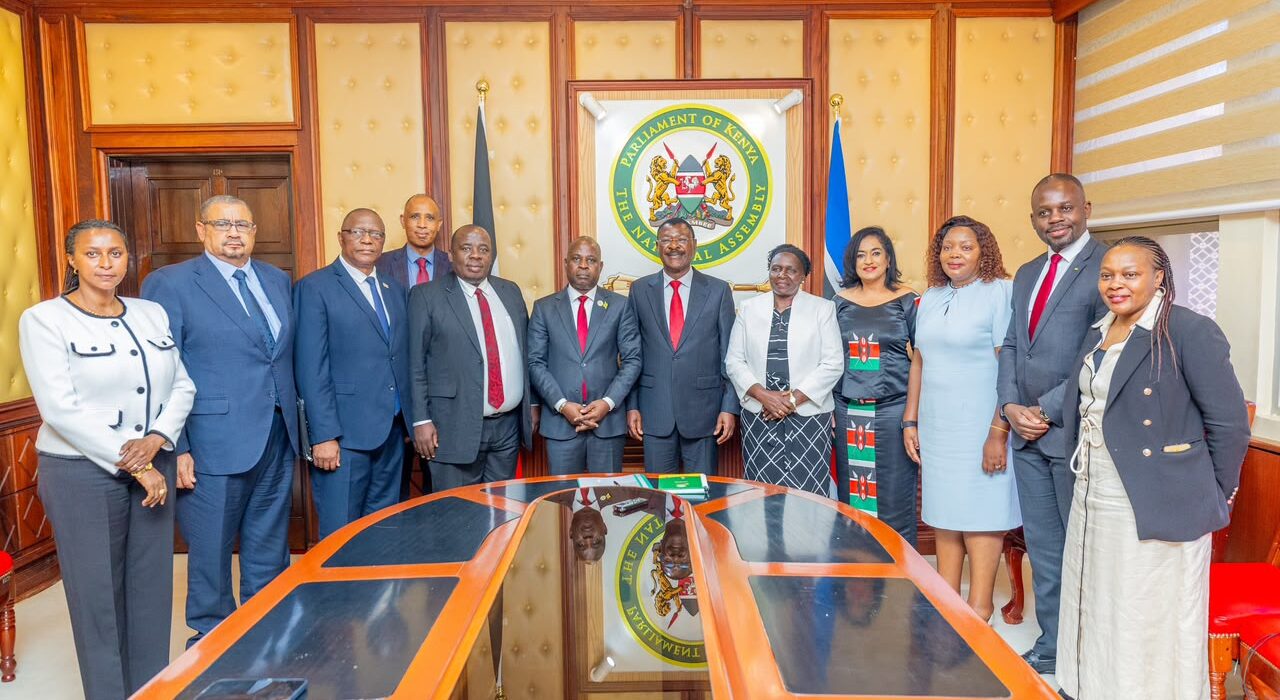
Speaker Wetang’ula made the remarks while hosting members of the Pan-African Parliament (PAP) at the Parliament Buildings, where discussions centred on the worsening effects of climate change and on the development of a Model Law on Climate Change for Africa.
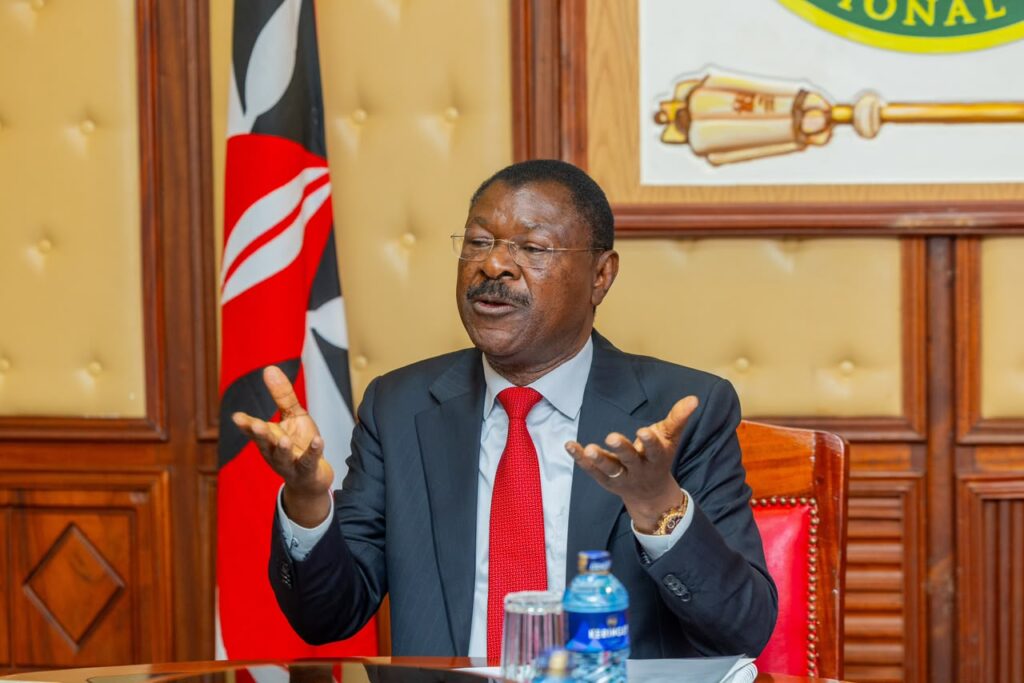
He commended the PAP initiative, saying the continent needed to rethink its approach to climate change and develop practical solutions backed by adequate resources.
He emphasised the need to establish a realistic and sustainable funding model for climate action, including a Climate Change Fund, arguing that laws and international treaties would have little impact without resources for implementation.
“We have the will, laws and treaties, but remain an island that is helpless,” he said.
Hon. Wetang’ula said Africa was endowed with vast mineral and natural resources and should learn to harness its wealth responsibly while building the capacity to finance its own priorities.
He urged African lawmakers to develop a common continental template for environmental protection and natural resource management before taking the continent’s concerns to the international arena.
“We created the Pan-African Parliament to save Africans. There are certain things we can do as Africans before going to the international arena to make our case,” he said.
The Speaker recalled how rural communities once relied on predictable weather patterns, saying climate change had disrupted traditional knowledge and water systems.
“We grew up in rural areas, and our parents, who never had formal education, could predict weather patterns. Today, you cannot predict them. Planting seasons have changed,” he said.
He added that many streams that were once permanent had become seasonal. “90 percent of our streams are now seasonal. They dry up for more than four months a year. This is a nightmare,” he said.
Dr. Wetang’ula called for African countries to speak with one voice on climate finance and mitigation, warning that the continent’s communities were bearing the consequences of environmental degradation.
He cited Kenya’s tree-growing programme and ongoing efforts to rehabilitate rivers, including the Nairobi River, as examples of interventions that require sustained investment.
“We need substantive resources to protect our minerals. We need stronger accountability for environmental polluters. Kenya’s position as host to the United Nations Environment Programme (UNEP) provides an opportunity to champion continental environmental action.”
“We need to commit and punish climate polluters. We are on our own,” Speaker Wetang’ula warned.
He further proposed taxing the extraction of minerals and other natural resources, with revenues directed toward environmental protection.
“It should not be left to individual countries to decide what to do with some of our heritage,” Hon. Wetang’ula said, urging Africa to protect its natural wealth for present and future generations.
Pan-African Parliament (PAP) Vice-Chairperson of the Committee on Agriculture, Hon. Euphreme Outata, and the delegation leader called for stronger climate financing mechanisms, including taxation of mineral extraction, to support climate change mitigation.
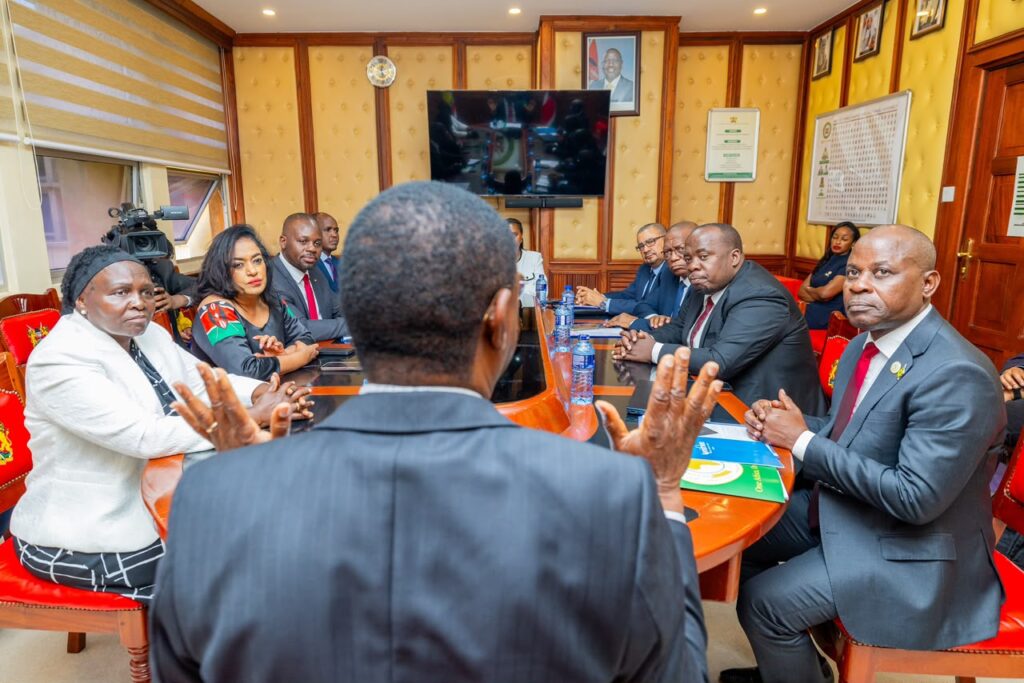
Speaking during the courtesy call on Speaker Wetang’ula, Outata said revenues from mineral extraction should be ring-fenced for climate interventions.
“We are making progress. We have examined this modern law and tested whether it can work across all institutions and countries,” he said.
He called for resources to support implementation and urged countries to protect vulnerable groups, including women, children, people with disabilities and fishing communities.
“Africa is paying a heavy price for climate change. We need proper taxation of those extracting our minerals,” he said.