By Mazera Ndurya
The excitement was palpable. The coastal city of Mombasa was bubbling. History was being made. This time round, the port city was hosting the first ever “Our Oceans Conference” -OOC on African soil.
It was an acknowledgment of Kenya’s and the continent’s central role in ocean conservation, fisheries, climate resilience and the sustainable blue economy
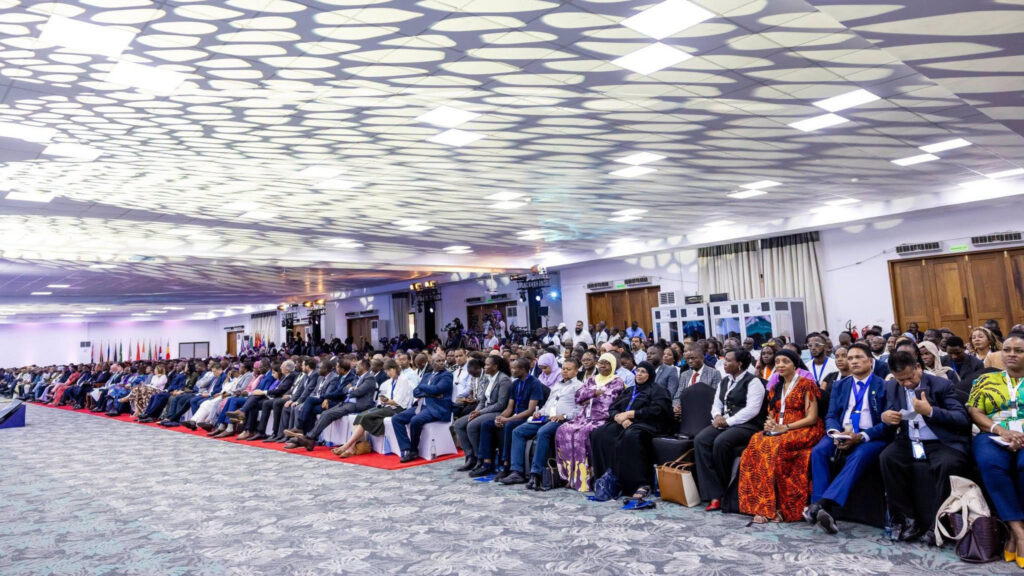
With over 5,000 delegates participating in the 11th Our Ocean Conference in Mombasa, Kenya and over US$6 billion in commitments, 2026 will go down in history as epic in global ocean governance.
For three days in June, Mombasa became the centre of the global conversation on the future of the ocean.
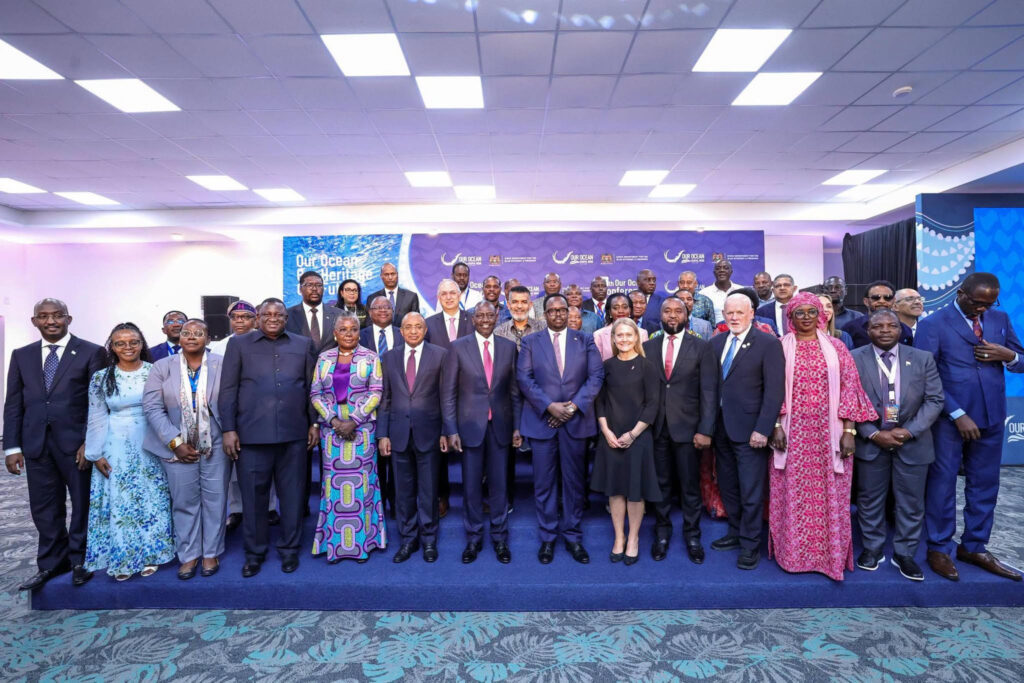
From June 16–18, 2026 delegates including heads of state and government, ministers, scientists, youth leaders, businesses, civil society organisations, the media and Indigenous representatives gathered for the Conference under the theme “Our Ocean, Our Heritage, Our Future.”
However, after three days of shuttling from one conference hall to the next and exhibitions that marked the event, the real test of the Mombasa conference began immediately the delegates left.
The summit produced 320 new commitments valued at approximately US$6.4 billion, covering ocean-climate action, marine pollution, marine protected areas, maritime security, sustainable fisheries and the sustainable blue economy. Kenya alone announced 42 commitments worth an estimated US$1 billion.
The voices that defined Mombasa
The conference brought together an unusually broad range of voices, but one message cut across the political and technical discussions: the world has moved beyond the point where ambition alone is sufficient.
Former US Secretary of State and founder of the Our Ocean Conference, John Kerry, brought that urgency to the opening discussions.
Kerry’s intervention focused heavily on the gap between declaring marine areas protected and actually protecting them. He called for countries to ratify and move quickly to implement the High Seas Treaty, warning that much of the world’s apparent ocean protection still exists more on maps than in reality.
“We wanted more than speeches, we wanted people to come to the table with an announcement of specifically what they will do and when and how much it will cost,” said Kerry.
His message was particularly significant because the High Seas Treaty (HST) formally the Agreement on Biodiversity Beyond National Jurisdiction (BBNJ) had entered into force earlier in 2026. The next challenge is therefore implementation: translating a historic international agreement into functioning marine protected areas, scientific cooperation and enforcement on waters beyond national jurisdiction.
Kerry added: “We need to insist that the ocean is at the heart of climate policy and that the word protected means ‘protected’ and nothing less.”
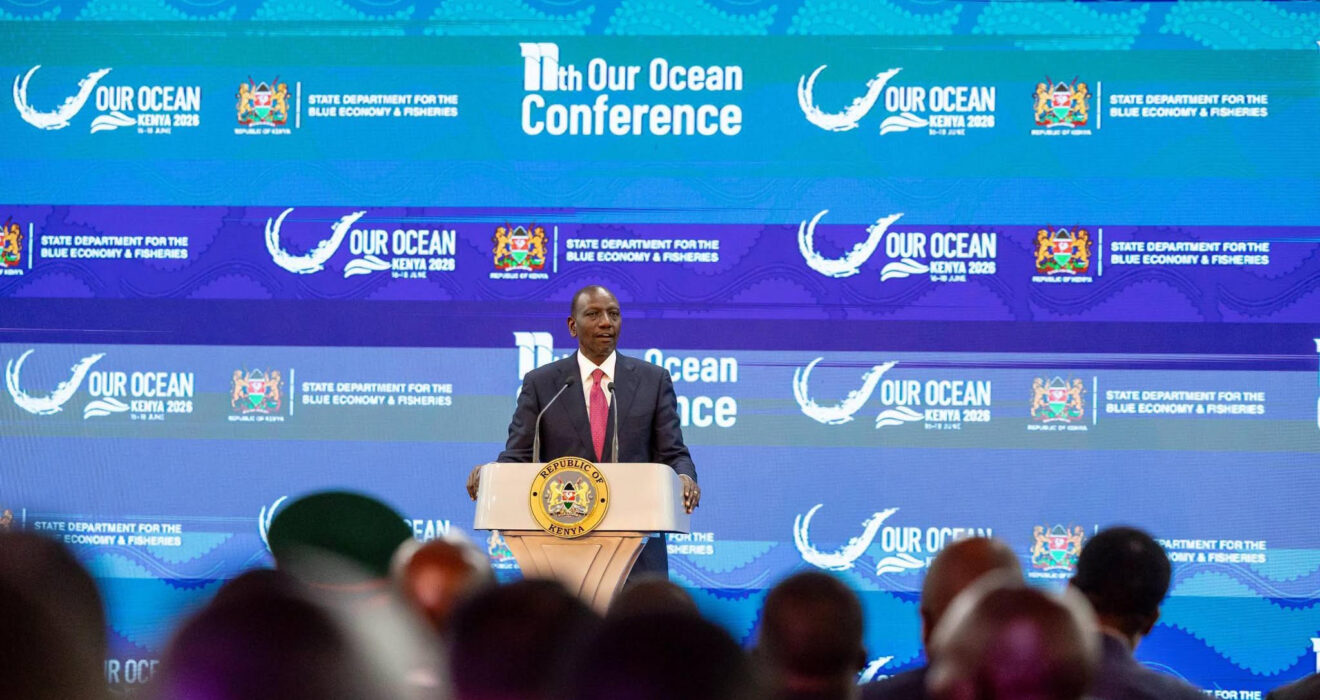
For Kenya, President William Ruto used the closing of the conference to reinforce the country’s emerging ocean agenda and the need to turn commitments into action.
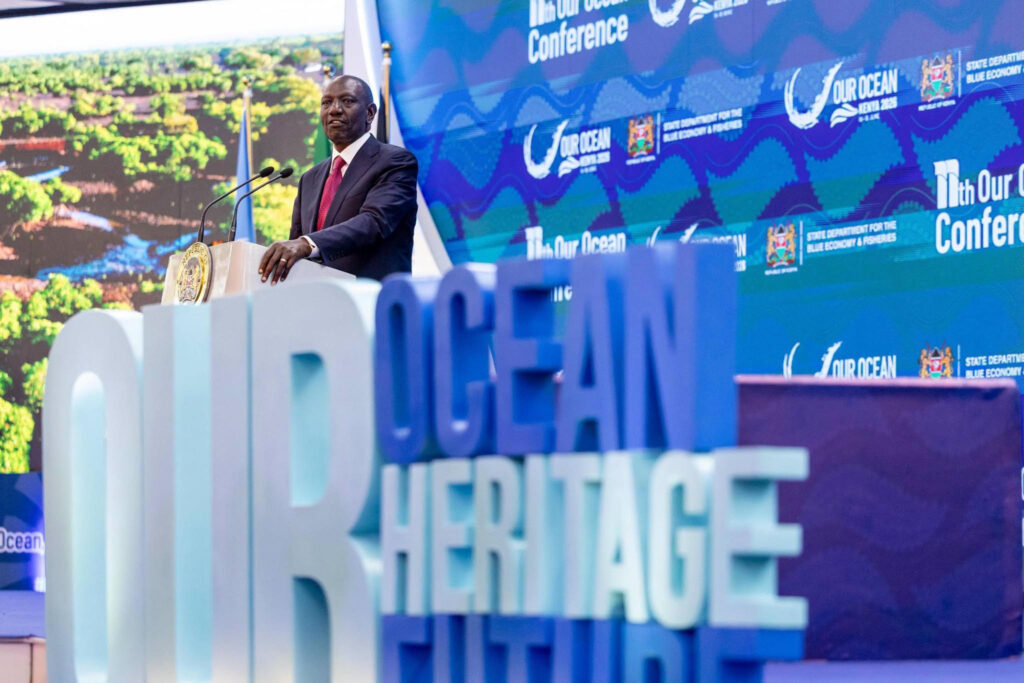
“Let me reiterate that commitments without the means to deliver them will never match the urgency or the scale of what the ocean now demands of us.”
President William Ruto positioned Kenya’s hosting of the conference as evidence of Africa’s growing leadership in ocean governance. He called for a shift from relationships based on aid and dependency to partnerships founded on sovereign equality and mutual benefit.
“Going forward, the conversation and engagement by those of us from the Global South and Africa will no longer be on dependency; rather, it is going to be on sovereign equality,” Ruto said.
The President also warned that Africa could not be expected to carry the greatest burden of protecting global public goods without adequate financing, technology and institutional support. His message was especially relevant to coastal states whose communities experience the effects of climate change, pollution and declining fisheries despite contributing relatively little to historical emissions.
Ruto urged partners to help protect 30 percent of the ocean by 2030, green ports, advance blue-green industrialisation, create dignified jobs and secure a resilient ocean.
He emphasised that the measure of success would not be what leaders said during the conference, but what they built after leaving Mombasa.
The people behind the statistics
A poignant highlight of the conference was the place of coastal communities in ocean governance.
Although heads of state and international leaders dominated the headlines, the conference’s takeaways also placed coastal communities at the centre of the blue-economy debate. For fishing communities, mangrove restorers, tourism workers, women traders and young innovators, ocean policy is experienced through daily realities: access to fishing grounds, changing weather, coastal erosion, plastic pollution and competition for marine resources.
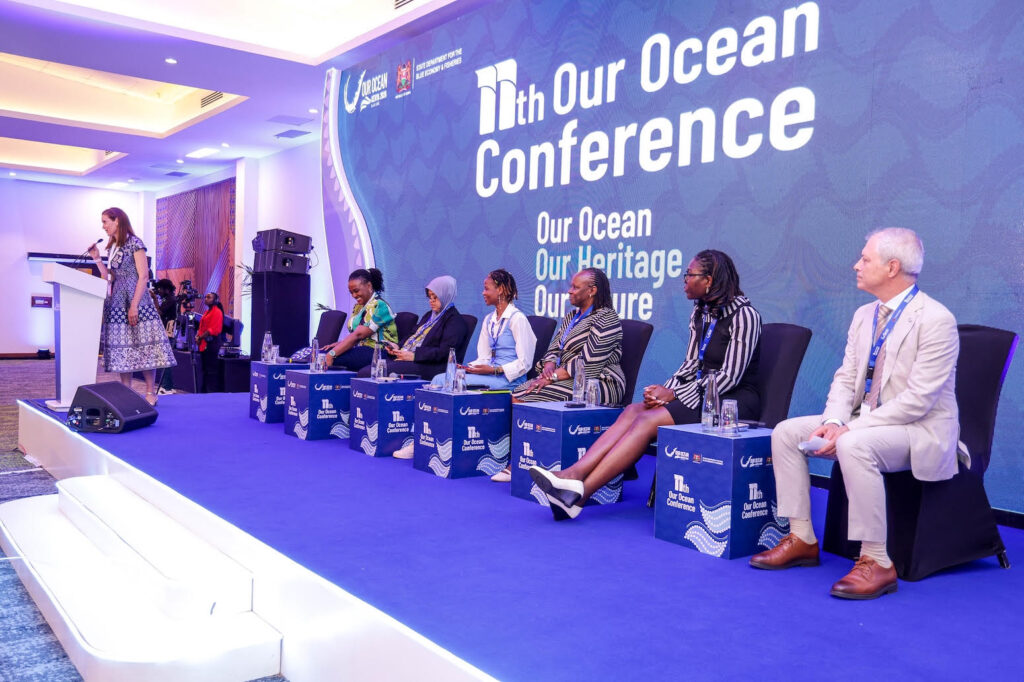
One powerful voice is from Amina Komora, described by Lamu Marine Conservation Trust as a traditional fisherwoman, community midwife and representative of the Sanye community. She participated in OOC11’s discussion on community-led marine protection.
“A woman from Sanye, a highly marginalised community, is now accessing a global platform, and our story is being seen by the world.”
On the 30by30 marine-conservation target, she asked: “How can we speak of communities conserving the ocean when they are foot fishers who cannot even access the open sea?
Key takeaways
1. Ocean action moved from ambition to investment
The US$6.4 billion announced at the conference signalled growing recognition that ocean protection requires substantial and sustained finance. The World Bank separately announced a commitment of US$1 billion over two years to support developing countries building sustainable and resilient blue economies.
The challenge is to ensure that the money reaches projects with clear public benefits rather than remaining as broad announcements. Finance must be accessible to coastal counties, community organisations, small-scale fishers, women’s groups, research institutions and locally owned enterprises—not only to large international projects.
2. Fisheries transparency
One of the most important outcomes was the Mombasa Declaration on Fisheries Transparency, adopted by 16 countries. It seeks to improve transparency in the fishing sector and strengthen the fight against illegal, unreported and unregulated fishing, commonly known as IUU fishing. In Kenya, for instance, the commitment to reduce IUU fishing was underscored by the huge loss the country is suffering through the vice.
The declaration called for measures including:
- Modernising digital vessel registries.
- Publishing fishing licences, authorisations and access agreements.
- Improving information on vessel ownership and beneficial owners.
- Sharing information among governments and with international bodies.
- Strengthening monitoring, control and enforcement.
These measures are important because illegal operators often exploit gaps between jurisdictions.
3. Blue carbon
Kenya placed mangroves and seagrass ecosystems at the centre of its climate and ocean agenda. The country announced targets to restore and manage 61,000 hectares of mangroves and 39,000 hectares of seagrass by 2030.
These ecosystems protect shorelines, provide fish nurseries, and support local livelihoods and store significant amounts of carbon. Their restoration can therefore deliver several benefits at once: climate mitigation, coastal protection, biodiversity conservation and employment.
4. Science and data
The conference highlighted the importance of ocean research, observation systems and open data. A proposed ocean-climate research centre, valued at approximately US$150 million and targeted for 2027, was among Kenya’s regional commitments.
This is significant for Kenya and the wider Western Indian Ocean region, where better data is needed on ocean temperatures, fisheries, coral reefs, pollution, coastal erosion, sea-level rise and extreme weather.
Research, however, must not remain confined to academic institutions. Scientific information should be converted into practical tools for county governments, fishers, port authorities, conservation agencies, schools and coastal businesses.
5. Innovation and youth
The launch of the 1,000 Ocean Startups initiative reflected an effort to support entrepreneurship and technology in the blue economy. Other conference discussions addressed marine pollution, digital monitoring, artificial intelligence, satellite systems, citizen science and sustainable financing.
For Kenya’s young population, the blue economy can provide opportunities in aquaculture, marine tourism, maritime logistics, ocean technology, waste management, renewable energy and ecosystem restoration. However, those opportunities will require skills development, incubation, affordable finance and access to markets.
Conference resolutions
Short-term
Strengthen fisheries transparency
Kenya and other signatories should begin by reviewing vessel registries, publishing relevant fishing authorisations, identifying beneficial ownership and establishing practical data-sharing arrangements.
The process should include small-scale fisheries, while recognising that information requirements must be proportionate and accessible to local fishing communities.
Begin priority restoration projects
Kenya should identify restoration sites for mangroves, seagrass and coral reefs, establish baseline data and involve local communities from the beginning.
Address marine pollution
The National Plastic Action Partnership announced around the conference should be linked to practical action in coastal towns and cities: better waste collection, recycling, port reception facilities, enforcement against dumping and public education.
Long-term priorities
Build a sustainable blue economy
The blue economy should be measured not only by investment and economic growth, but also by ecosystem health, decent work, social inclusion and resilience. Ports, tourism, aquaculture, shipping and fisheries must operate within ecological limits.
Protect at least 30 percent of the ocean effectively
Area-based conservation targets must be accompanied by effective management. A marine protected area that exists only on paper will not protect fish stocks, coral reefs or coastal communities.
Long-term success will require enforcement, ecological connectivity, adequate budgets, scientific monitoring and community participation.
Institutionalise ocean science
Kenya and its regional partners should strengthen research institutions, ocean-observation networks, data systems and scientific training. The Western Indian Ocean requires shared monitoring because currents, fish stocks, marine pollution and migratory species cross national boundaries.
Create regional fisheries cooperation
IUU fishing cannot be defeated by one country acting alone. Coastal states in the Western Indian Ocean need compatible regulations, shared vessel information, coordinated inspections and stronger cooperation among fisheries agencies, ports, customs authorities and maritime-security institutions.
Make climate finance reach communities
Blue-carbon and coastal-resilience projects should provide transparent benefits to communities that protect mangroves, seagrass and coral reefs. Financing arrangements must avoid displacing local people or restricting traditional livelihoods without consultation and compensation.