
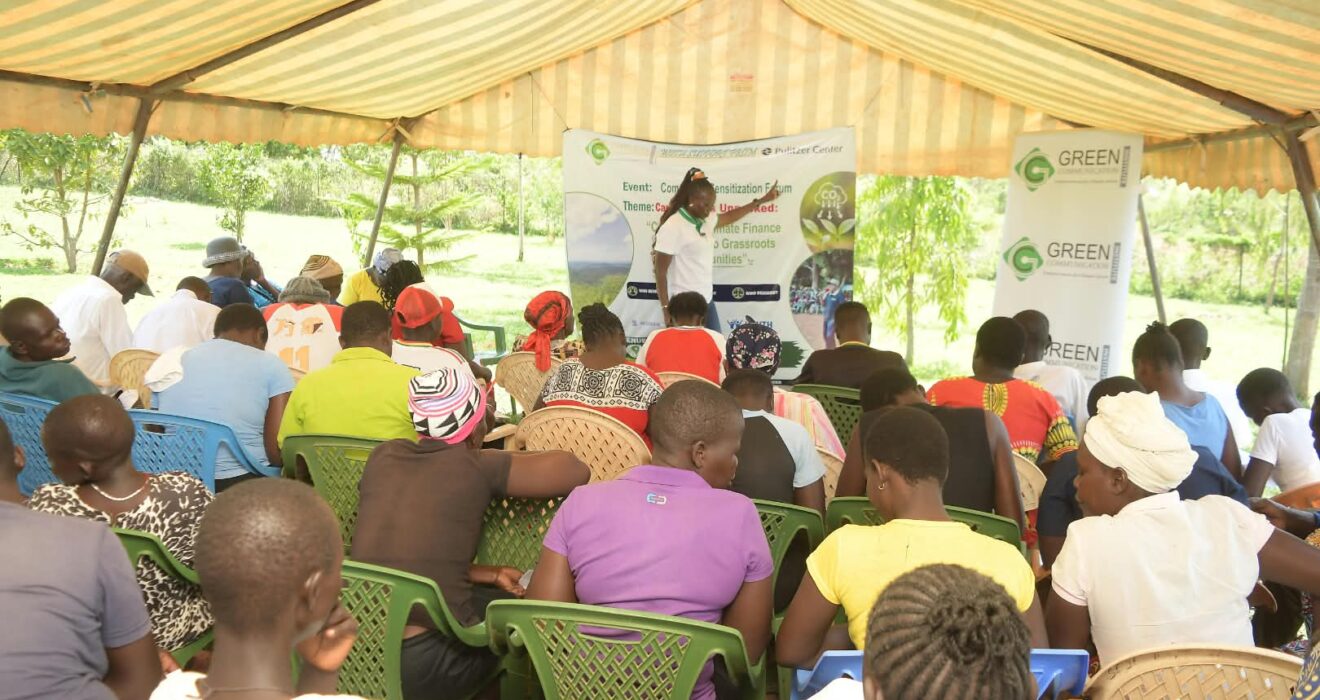
Training was organised by Green Communication Institute with support from the Pulitzer Center in the US.
BY GREENCOMMS WRITER
From Bungu to Uluamba villages in Seje, Alego Usonga Constituency in Siaya County, a growing community interest in climate action brought farmers, women and young people together for an engaging conversation on carbon credits, community rights and opportunities in the emerging green economy.
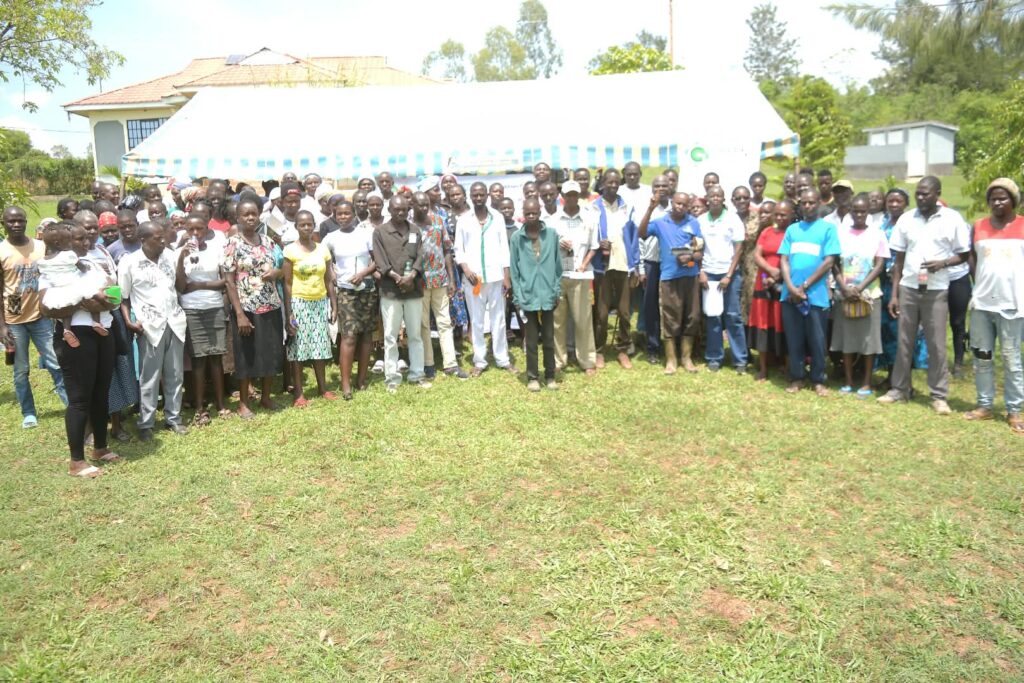
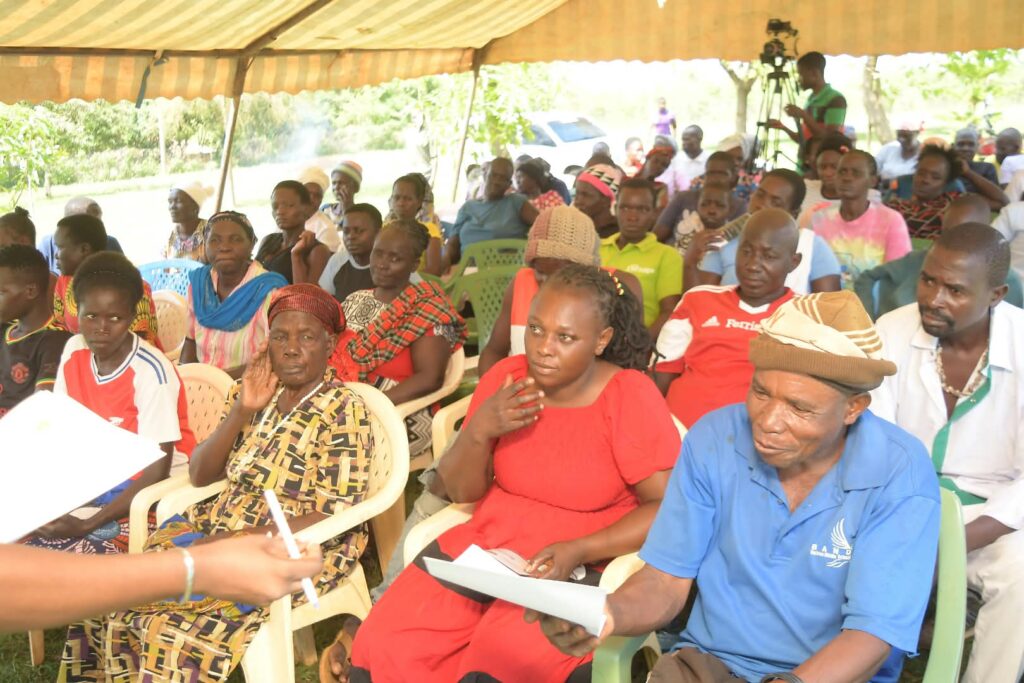
What happens when communities get an opportunity to ask questions about an emerging climate issue that could directly affect their land, livelihoods and future? The answer was evident when nearly 100 farmers, women and young people from Bungu and Uluamba villages turned up for the Carbon Credit Unpacked community engagement, organised by the Green Communication Institute (GCI), with support from the Pulitzer Center of the United States.
It was more than a training session. The engagement became a space for knowledge exchange, open discussions, questions, networking and shared learning. Participants came together to explore what carbon credits mean, how carbon projects work and, importantly, what these initiatives could mean for the communities whose land and natural resources are often central to such projects.
Understanding carbon credits: Connecting global conversations to local realities
Carbon credits are increasingly becoming an important component of global climate action. They provide a mechanism through which activities that reduce, avoid or remove greenhouse gas emissions can generate credits, generally representing one tonne of carbon dioxide equivalent (CO₂e). These credits can be generated through initiatives such as forest conservation, reforestation, agroforestry, renewable energy and improved agricultural practices. However, while carbon markets present opportunities to mobilise resources for climate action, many communities remain unfamiliar with how they work and what participation could mean for them.
Who owns the carbon rights? How are projects developed? Who benefits financially? What responsibilities do participating communities assume? How are their land rights and livelihoods protected?
These were some of the important questions underpinning the Carbon Credit Unpacked engagement. The initiative sought to bridge the information gap by making carbon market concepts accessible and creating room for communities to interact with experts, seek clarification and develop a better understanding of the opportunities and responsibilities associated with carbon projects. County climate leadership: Learning from Siaya’s experiences The engagement was enriched by the presence of Mr Gabriel Oduong, Director of Climate Change, Environment and Natural Resources, Siaya County Government, who took participants through an understanding of carbon credits and their relevance to climate action. Drawing on practical examples of carbon credit projects in Siaya County, Mr Oduong helped participants appreciate how carbon market initiatives translate into activities within their own county. He highlighted the importance of collaboration among different stakeholders in addressing climate change, emphasising that effective climate action requires coordinated efforts between government, communities, development partners, research institutions and other relevant actors.
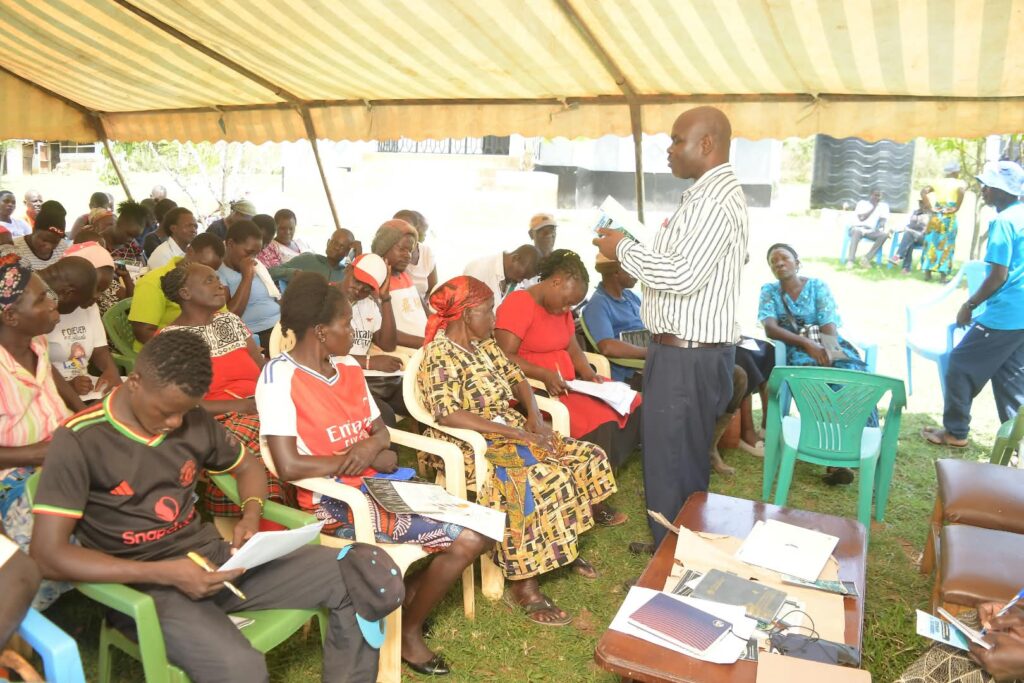
He also underscored the importance of forest conservation, drawing attention to its environmental and socioeconomic benefits. Beyond their role as carbon sinks, forests contribute to biodiversity protection, water conservation, soil protection and the sustainability of ecosystems that support community livelihoods. His presentation also provided an opportunity to acknowledge the role of development partners in advancing climate communication. He lauded Pulitzer Center and GCI’s for facilitating the Carbon Credit Unpacked initiative and bringing critical climate information closer to communities.
The discussions reinforced an important message: carbon markets cannot operate in isolation from broader climate governance, environmental protection and community development efforts.
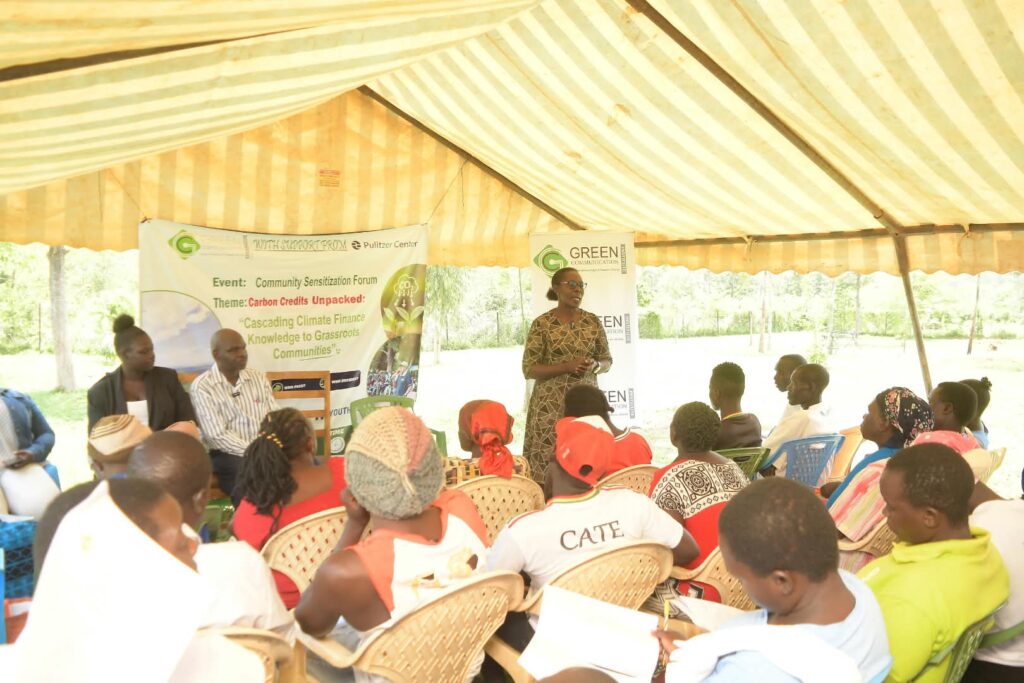
Dr Pamella Jael A. Were, Coordinator of the Blue Economy Institute at Jaramogi Oginga Odinga University of Science and Technology (JOOUST), and Senior Lecturer and Researcher in Environmental Biology, Climate Change and Community Development, weighed in with academic and research perspectives to the engagement, complementing the county government’s practical experience. The combination of county climate leadership and academic viewpoints allowed participants to engage with carbon markets from different perspectives, connecting environmental science, climate change, community development and local climate action. By bringing these voices into one space, the engagement demonstrated the value of linking research, policy and community experiences in addressing climate challenges.
When communities become part of the conversation
Perhaps the most memorable aspect of the engagement was the willingness of participants to share their own experiences and ongoing efforts to respond to climate change. Rather than remaining passive listeners, farmers and other community members actively contributed to the discussions, demonstrating that climate action is already taking place at household and community levels. Participants shared experiences in practising climate-smart agriculture, highlighting the importance of adopting agricultural approaches that respond to changing climatic conditions while supporting productivity and sustainable land use. Tree planting, with a particular interest in fruit trees, was elaborately canvassed. This brought out an important dimension of tree planting beyond environmental conservation: fruit trees can also contribute to household food security, income generation, soil protection and long-term livelihood resilience. Another issue raised by a community member was the need for more reliable information from the county on rainfall patterns and seasonal forecasts. The participant emphasised that farmers need timely and accessible climate information to determine appropriate planting times and make informed decisions about the seeds best suited to prevailing conditions. The concern highlighted a practical challenge facing many smallholder farmers: even where there is a willingness to adopt sustainable agricultural practices, access to reliable climate information, appropriate seeds and timely agricultural guidance remains essential. These contributions brought the discussions closer to the everyday realities of communities and demonstrated that climate communication must go beyond explaining climate change. It must also provide information that people can translate into practical decisions. These insights illustrated three important dimensions of community climate action:
- Climate-smart agriculture: Supporting farmers to adopt practices that strengthen productivity, improve resilience and respond to changing weather conditions.
- Tree planting and agroforestry: Promoting tree growing, particularly fruit trees, for environmental conservation, food security and additional household livelihood opportunities.
- Climate information services: Strengthening access to reliable rainfall forecasts, seasonal information and appropriate agricultural advisories to help farmers make informed planting decisions. These discussions reinforced the need to connect carbon market conversations with broader climate adaptation priorities, particularly those that directly affect rural livelihoods.
While carbon markets present opportunities for financing climate action, their success must be measured not only by the volume of carbon credits generated but also by the environmental and social benefits delivered to participating communities. Communities need to understand the implications of entering into carbon project agreements, including land ownership, carbon rights, project duration, benefit-sharing arrangements, consent requirements and accountability mechanisms.
Free, Prior and Informed Consent (FPIC), transparency and equitable benefit-sharing are important safeguards in community-based carbon initiatives. For farmers, women and young people, access to accurate information is essential in determining whether and how to participate in such projects. The engagement therefore reinforced the importance of ensuring that communities are not merely beneficiaries of climate initiatives but informed participants capable of asking questions, evaluating opportunities and protecting their interests.
GCI and Pulitzer Center: Taking climate information closer to communities
The Carbon Credit Unpacked initiative reflects GCI’s commitment to strategic climate communication and its belief that access to accurate, timely and understandable climate information is essential for meaningful climate action. Climate issues are often discussed in technical language and within policy and research spaces, leaving many of the communities most affected by climate change with limited opportunities to understand emerging developments.
Through this initiative, GCI seeks to bridge that gap by connecting technical expertise with community experiences and creating platforms for dialogue, learning and informed participation. The engagement in Bungu and Uluamba demonstrated the importance of this approach. By bringing together community members, county government leadership and academic expertise, the initiative created a space where information could be shared, questions addressed and practical experiences valued. Beyond the gathering: A more informed community The vibrant sessions strongly underlined the interest in understanding carbon markets and exploring practical approaches to climate action. But the real value of the gathering went beyond the numbers.
It was reflected in the farmer who shared experiences in climate-smart agriculture, the community member investing in fruit trees, and the participant calling for better access to rainfall information to guide agricultural decisions. It was also evident in the conversations around forest conservation, collaboration, carbon rights and the importance of ensuring that communities understand the projects that may affect their land and livelihoods. These contributions demonstrated that climate action is not an abstract concept. It is already reflected in the decisions communities make about what they plant, how they use their land, how they conserve natural resources and how they prepare for changing weather patterns.
For GCI, the engagement marked another important step towards strengthening community understanding of climate change and promoting informed participation in emerging climate initiatives.
The message from Bungu and Uluamba was clear: communities want to learn, participate and be part of the decisions shaping their environmental and economic future. Carbon markets should not only be understood by project developers, investors and policymakers. The communities whose land, resources and livelihoods are involved deserve to understand them too. Because meaningful climate action begins with informed communities, thrives on collaboration and delivers lasting value when people are placed at the centre.