
BY GREENCOMMS REPORTER
Efforts to rid millions of households and institutions across Kenya of traditional biomass fuels used in cooking began in earnest today as the Senate commenced debate on how best to mainstream a framework for clean cooking.
A breakfast meeting at Parliament today – Wednesday September 9, 2026 – bringing together Members and stakeholders from diverse backgrounds, paved the way for a Motion that could inject fresh impetus to a long-drawn endeavour to reduce indoor air pollution blamed for over 26,000 annual deaths in Kenya, mostly women and children.
Green Communication Institute Executive Director Maricus Agutu was among representatives of stakeholder groups who attended the meeting.

The Motion has been tabled by Nominated Senator Hamida Kibwana, set the tone for the gathering with a passionate appeal for concerted action to tame the menace that she contends directly violates Article 42 of the Constitution that guarantees every Kenyan the eight to a clean and healthy environment – which includes access to safe energy options.
Statistics tabled at the meeting indicate that nearly 70% of Kenyan households (9.1 million), rising to over 90% in rural areas, and 90% of institutions such as schools, hospitals, and prisons, still rely on traditional biomass fuels (firewood, charcoal, animal waste), resulting in indoor air pollution that causes over 26,000 annual deaths, disproportionately affecting women and children.
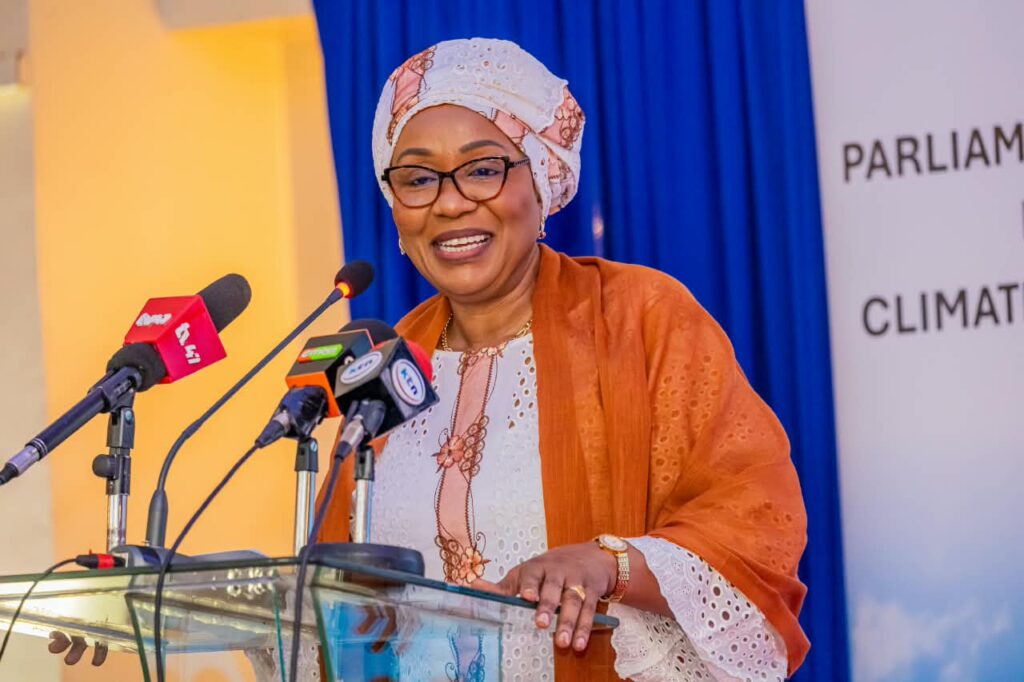
“Reliance on traditional cooking methods contributes to deforestation, greenhouse gas emissions, and climate vulnerability, undermining Kenya’s commitments under the Energy Act 2019, Climate Change Act 2016, and Kenya’s Nationally Determined Contributions,” said Senator Kibwana.
The Motion that was debated in the Senate for a better of the day, reads that the Kenya National Cooking Transition Strategy (KNCTS 2024), the Kenya National Electric Cooking Strategy (KNeCS), the Behaviour Change and Communication Strategy, and the Consumer and Enterprise Financing Strategy, together provide the policy and financing framework for achieving universal clean cooking access by 2030.
Delivering household-level access under these strategies requires an estimated USD 435 million, excluding the additional needs of institutions and Small and Micro Enterprises (SMEs). In parallel, the Kenya Energy Compact seeks to mobilize resources to close a USD 1 billion financing gap for clean cooking, underscoring the scale of investment required to meet national and global commitments.
The Motion recalls that Africa Clean Cooking Summit (Paris, 2023) mobilized USD 2.2 billion in commitments for clean cooking, and the International Energy Agency has recommended urgent financing and policy action to achieve universal access by 2040.
The Government of Kenya has established policies and regulations to provide clarity and guidance for carbon market development, most notably through the Climate Change (Carbon Markets) Regulations 2024. Further climate finance, and particularly carbon markets, can play a strategic role in mobilizing the capital required to scale household and institutional clean cooking investments in Kenya.
However,delays in publishing a national whitelist for eligible projects, as well as issuance of Letter of Authorization (LoA) – including for Clean Cooking Sector hinders efforts to unlock carbon finance for the sector.
There have been concerted efforts of some counties, development partners, and private sector actors in piloting clean cooking projects, but these remain small-scale and fragmented.
The Motion, seeks a Senate resolution compelling the National Treasury and the Ministry of Energy and Petroleum to prioritize clean cooking within national financing frameworks, employing results-based financing and blended finance models to de-risk private investment.
“Kenya shall, in parallel, accelerate access to climate finance and carbon markets by leveraging the Climate Change (Carbon Markets) Regulations 2024 to mobilize capital for both household and institutional adoption.”
Further, the Ministry of Energy and Petroleum, through the Clean Cooking Implementation Unit, are required to strengthen coordination with relevant Ministries, Departments and Agencies (MDAs), counties, development partners, and the private sector to accelerate delivery of Kenya’s clean cooking agenda;
Additionally, the Ministry of Environment, Climate Change and Forestry, together with the National Environment Management Authority (NEMA) through the Designated National Authority (DNA) are required to make public the following:
- A national whitelist for eligible projects for issuance of letters of authorization, including the clean cooking sector; and
- Clear guidelines and standard operating procedures for the issuance of Letter of Authorization (LoA) thus helping to unlock carbon finance markets (Article 6.2 and CORSIA) for clean cooking projects;
The role of the Council of Governors is also to be leveraged whereby the lobby is required to support county-level efforts to develop energy policies, frameworks, and budgets that mainstream households as well as institutional clean cooking into devolved energy and health functions.
“County governments, through the Council of Governors, integrate clean cooking into devolved energy, health, and environment functions, embedding measurable targets within County Integrated Development Plans (CIDPs) to ensure coordinated delivery and accountability.”
County Governments must also engage the private sector actors, and community organizations to expand clean cooking access, create local jobs, and reduce pressure on forest resources.
Earlier at the breakfast meeting, Senator Hamida was commended for a bold step that goes a long way in alleviating suffering in many Kenyan households.
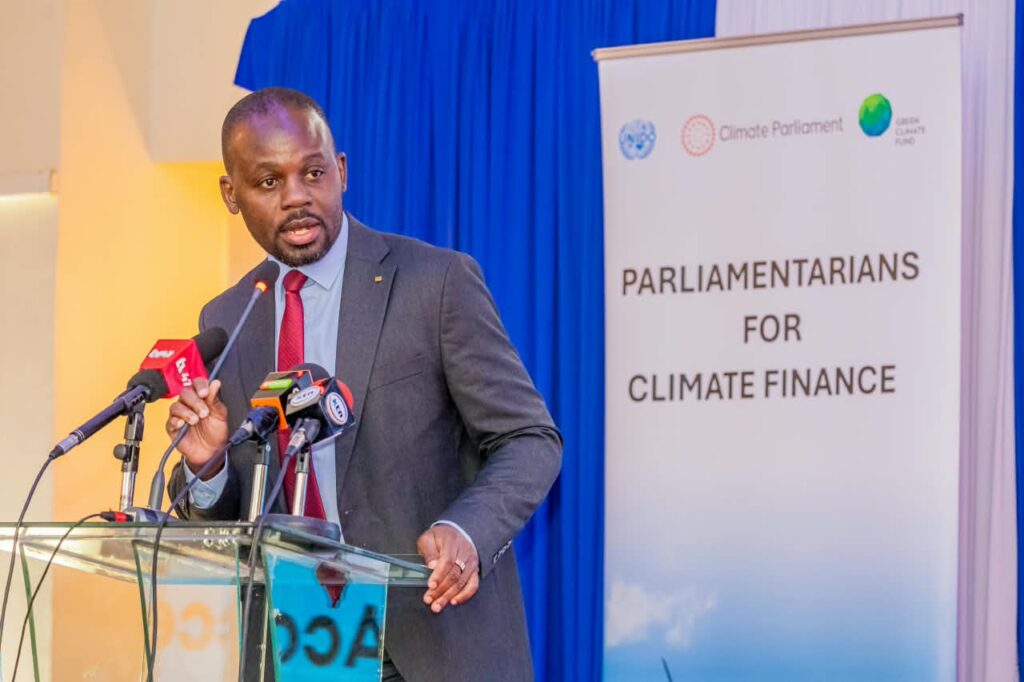
In a presentation titled: A High-Level Strategic Briefing for the Senate on Legislative Action, Climate Finance & County Equity, Dr. Faith Wandera, the Director of Renewable Energy at the State Department for Energy hailed progress that Kenya has made in the clean cooking space.
With an access rating of 34.4 %, Kenya is the leader in the East African Region with regard to clean cooking imperative.
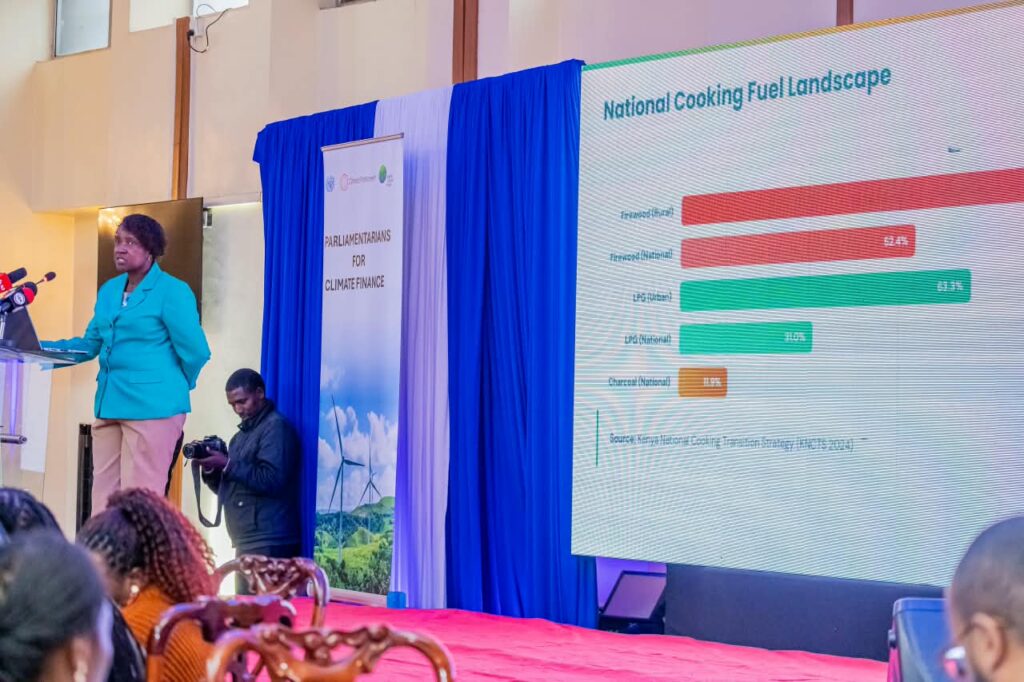
Dr Wandera described clean cooking as a core devolution and equity issue and shared county access and regional equity distribution.
- Firewood usage is highest in Wajir (89.5%), West Pokot (87.9%), Elgeyo Marakwet (87.1%), and Bomet (84%).
- Five counties alone—Wajir, Nakuru, Kakamega, Meru, and Bungoma—account for 1.83 million households (21%) of the national clean cooking deficit.
“The MOEP has supported about 23 counties to develop CEPs + 5 others in the process. The absence of clean cooking targets from the CIDPs limits access to funding.
Recalling that Senators play a central role in directing resource allocations and targeted energy programs to historically underserved rural counties, Dr Wandera challenged the Members to remain committed to this cause to lift households from adverse effects of unclean cooking.
Clean cooking functions as a frontline preventive health policy, cutting county clinical expenditures and emergency healthcare burden.
Because healthcare is a devolved function, county hospitals bear the financial brunt of treating chronic respiratory illnesses, eye damage, and burns, she said.
“Transitioning populations away from charcoal and other unclean fuels can save the government KES 2.6 billion ($19.5 million) annually in avoided healthcare expenditures related to respiratory and cardiovascular illnesses,” she added.
Alluding to the The Kenya National Cooking Transition Strategy (KNCTS) targets, Dr Wandera said: “This composite pathway does not assume 100% of households transition to a single fuel. Instead, it promotes the integration of at least one clean cooking option in each household’s stack by 2028 to reach 15.1 million households.”